Quick tips for scheduling a florist-led wedding timeline
Posted on 29/05/2026
Planning flowers for a wedding can feel deceptively simple right up until the week of the event. Then suddenly you are juggling bouquet prep, venue access, ceremony timing, transport, buttonholes, table arrangements, and the one thing nobody wants to forget: when everything actually needs to be in the room. These quick tips for scheduling a florist-led wedding timeline are designed to take the guesswork out of that process.
If you are working with a florist, the best timelines are not the fanciest ones. They are the ones that give the florist enough breathing room to do careful work without slowing the rest of the day down. A good schedule protects the flowers, keeps the wedding party calm, and makes setup feel smooth instead of rushed. Truth be told, a calm 20-minute buffer can save more stress than an entire spreadsheet.
In this guide, you will find a practical breakdown of how florist-led timing works, what to schedule first, where delays usually creep in, and how to build a flower plan that actually fits a real wedding day. There is also a checklist, a comparison table, and a few realistic examples from the sort of timing issues couples run into all the time.
Table of Contents
- Why quick florist-led timeline planning matters
- How a florist-led wedding timeline works
- Key benefits and practical advantages
- Who this is for and when it makes sense
- Step-by-step guidance
- Expert tips for better results
- Common mistakes to avoid
- Tools, resources and recommendations
- Law, compliance, standards and best practice
- Options, methods, and comparison table
- Case study or real-world example
- Practical checklist
- Conclusion
- Frequently asked questions
Why Quick tips for scheduling a florist-led wedding timeline Matters
Flowers are one of the few wedding details that are both decorative and operational. They are not just there to look pretty in the photos; they have to arrive in good condition, be handled correctly, and fit neatly into the day's setup schedule. If the florist arrives too early, blooms can wilt in the wrong temperature or sit unattended. Too late, and the ceremony starts to feel like a relay race nobody asked for.
A florist-led timeline matters because floristry is hands-on work. Bouquets are assembled at a certain point for freshness. Buttonholes need to be pinned close to the moment they are worn. Table arrangements may need final water checks. Large installations often depend on venue access windows, which can be surprisingly short in busy hotels, barns, or registry offices. In a London venue, for example, you may only have a narrow loading slot or a strict set-up window, and that changes everything.
When your flower plan is scheduled properly, everyone else benefits too. The photographer knows when details will be ready. The bridal party knows when to get dressed. The venue team knows when to clear access. That kind of coordination is the difference between a wedding that feels composed and one that feels like people are dashing up and down stairs with ribbon in their hands.
Expert summary: The best flower timelines are built backwards from the ceremony, not forwards from the florist's arrival. Start with the moment the bouquet must be in hand, then work out transport, setup, and preparation time from there.
How Quick tips for scheduling a florist-led wedding timeline Works
At its core, a florist-led timeline is a planning system. It maps flower tasks against the real schedule of the wedding day so nothing is left to chance. The florist usually begins by learning the ceremony time, venue access rules, number of arrangements, colour scheme, and any special items such as corsages, buttonholes, or tribute pieces.
From there, the day is broken into stages. Some flowers are prepared in advance. Some are delivered shortly before the ceremony. Some are arranged on-site. And some, especially delicate bouquets and wearable flowers, need to be handed over as late as practical. That is normal. Fresh flowers do better with timing that respects them rather than forcing them to sit around looking perfect for six hours. They are beautiful, not immortal.
The timeline also needs to factor in human realities. Someone may be late getting ready. Parking may be awkward. A venue contact may not be reachable at 9 a.m. because they are already in the kitchen. These are the details that sound minor until the day itself. A florist who is involved early can help build timing around those realities rather than pretending they do not exist.
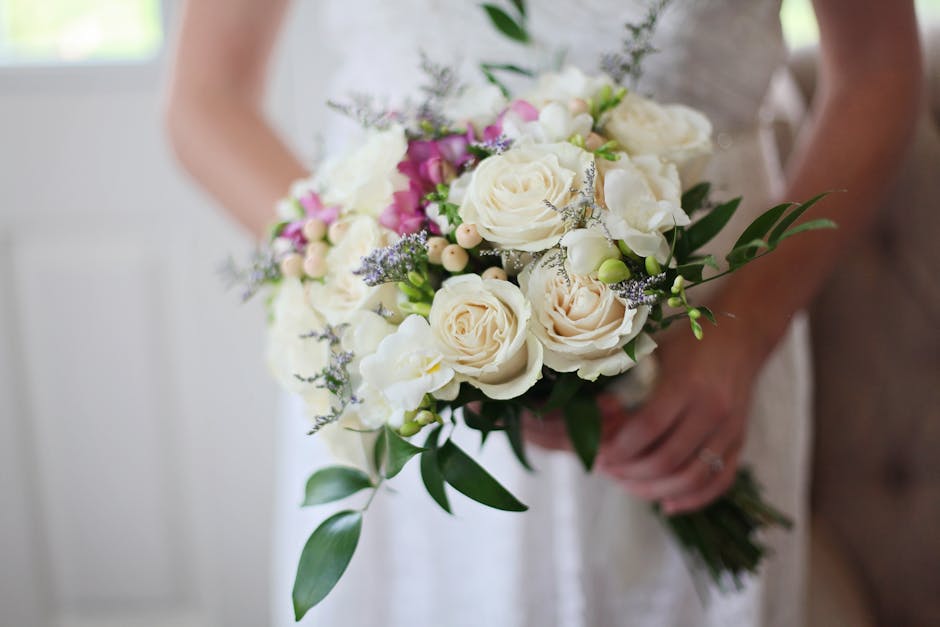
For inspiration on bouquet styles or wedding colour direction, it can help to review curated ranges such as bridal bouquets, bridesmaid bouquets, and buttonholes for the wedding party before finalising the schedule.
Key Benefits and Practical Advantages
A strong florist-led schedule does more than reduce stress. It improves quality, lowers the chance of last-minute changes, and gives the florist the best possible conditions to do beautiful work. That sounds obvious, but couples often underestimate how much timing affects the appearance and lifespan of the flowers.
- Better flower freshness: arrangements are prepared closer to the moment they will be used.
- Less pressure on the couple: nobody is wondering where the bouquets are while getting dressed.
- Smoother venue coordination: deliveries and setup fit around venue rules and access times.
- More polished photographs: the flowers are ready when the photographer needs detail shots.
- Fewer mishaps: transport, storage, and handover are all planned in advance.
There is also a creative advantage. When the florist has enough time, they can make subtle adjustments on the day. Maybe the ceremony table needs the arrangements shifted for better sightlines. Maybe the bouquet ribbon wants a small tidy-up before portraits. Those small refinements are what make the final result feel considered rather than merely delivered.
If you are working with a tighter budget, timing matters even more because it helps prioritise what needs to be fresh and what can be prepared earlier. You might pair a smaller bouquet plan with practical additions like flowers in a vase for reception tables or choose from best-selling designs that are easier to adapt. The point is not to spend more. It is to spend wisely.
Who This Is For and When It Makes Sense
This approach is useful for almost any wedding, but it is especially helpful if your day includes multiple flower touchpoints. Think bridal bouquet, bridesmaids, buttonholes, table flowers, top table pieces, ceremony arrangements, and maybe a few extras for photo moments. Once the floral elements multiply, timing becomes less of a detail and more of a management tool.
It makes even more sense if:
- your ceremony and reception are in different places;
- the venue has a short access window or limited parking;
- you are using seasonal flowers that need careful handling;
- you want ceremony flowers repurposed at reception;
- you have a large wedding party and need coordinated handovers;
- you are booking a florist package that includes several items, not just one bouquet.
It is also a smart move if you are considering a themed colour palette. Florist-led schedules help keep the visual story coherent across the day, whether you are leaning towards soft romance, bold reds, crisp whites, or a more mixed seasonal look. For colour-led planning, pages such as mixed colours flowers, white flowers, red flowers, and pink flowers can be helpful starting points.
To be fair, even smaller weddings benefit from this. A simple ceremony with one bouquet and a few buttonholes can still run late if nobody has agreed on who is collecting what, and when. Small wedding, same chaos potential. The florist timeline just makes it manageable.
Step-by-Step Guidance
1. Start with the ceremony time and work backwards
Everything starts here. If the vows begin at 1:30 p.m., the flowers need to be ready before the bridal party gets dressed, before the photographer starts details, and before guests begin arriving. Once you have the ceremony time, build the flower schedule backwards in blocks. That simple reverse-planning method is one of the most useful tricks around.
2. Confirm the florist's setup responsibilities
Ask exactly what the florist is delivering, installing, pinning, placing, or collecting. A bouquet delivery is a very different job from a full venue set-up. Some florists hand over flowers at one point; others stay to position arrangements. If there are table centres, arches, or church pieces, the handover schedule needs to be crystal clear.
3. Build in venue access time
Venue access can be the hidden bottleneck. Churches, hotels, and private venues often have different loading rules. In some places, a florist may only have 20 minutes to unload and move in, which is why precise timing matters so much. Always ask who opens the venue, which entrance is used, and whether there is a back-of-house route.
4. Schedule the bouquet handover late enough to stay fresh
Bridal bouquets are usually best handed over closer to the ceremony rather than hours ahead. They may need a light water refresh, a ribbon check, or a final stem trim. Bridesmaid bouquets, buttonholes, and corsages should also be assigned a clear delivery moment so they are not sitting on a windowsill while everyone is still in hair and makeup.
5. Sequence your wearable flowers carefully
Buttonholes and corsages are easy to forget until everyone is ready to leave. That is usually too late. Put them on the schedule as a dedicated task. If you have a mixed group, order matters too: groom, key family members, ushers, then others. It saves a lot of "who has the pins?" panic.
6. Place ceremony flowers before reception styling
If the ceremony and reception are in the same room, plan for a transition period. The florist may need time to move arrangements, repurpose pedestals, or rework the space after guests are seated. This is where the timeline gets clever. A good florist can make one arrangement work twice, and that usually stretches the budget nicely.
7. Add a buffer for transport and human delay
Traffic, weather, loading access, and that one missing bouquet bag all happen. Leave buffer time. Not the fake kind either. A real buffer. For an outdoor summer wedding, I would allow more breathing room because heat, wind, and direct sun can all affect flowers faster than people expect.
8. Set a final sign-off point
Before the florist leaves, there should be a final check: bouquets handed over, buttonholes bagged or pinned, table pieces placed, and any special instructions confirmed. This final sign-off is the moment where you catch tiny issues before they become visible. A slightly tilted vase. A missing ribbon. A card left behind. Easy fixes, if caught early.
Expert Tips for Better Results
Tip 1: Don't overbook the first hour of the wedding day. If the bridal party is due for photos, hair finishing touches, and flower handover all at once, something will slip. Give flowers their own slot.
Tip 2: Keep the florist informed about outfit changes. A thicker dress sleeve or a last-minute hairstyle change can affect how buttonholes, bouquets, and corsages are handled. Sounds small, but it matters.
Tip 3: Use one person as the flower point of contact. Ideally not the bride. Or the person carrying the rings. The best contact is someone calm, reachable, and not already doing six jobs at once.
Tip 4: Match flower variety to timing demands. Some blooms travel and hold better than others. If the timing is tight, your florist may recommend sturdier stems or mixed designs. For wedding arrangements that blend texture and resilience, pages like roses and lisianthus wedding arrangements or white lily, rose and orchid centrepieces can be useful references.
Tip 5: Photograph the flowers right after placement. If you want styling notes for the day, quick photos help you remember exactly how the bouquet sat, which arrangement went where, and whether something should be adjusted before the next event.
Tip 6: Keep communication human and simple. A clear text message beats a long vague email at 8 a.m. on the wedding day. Use names, times, and landmarks. Simple wins.
And one more thing: if the florist suggests a slight change for practical reasons, listen. They are usually protecting the end result, not being difficult. That little adjustment can be the difference between "fine" and genuinely gorgeous.
Common Mistakes to Avoid
- Leaving flower timing until the final week. By then, venue access and delivery windows are harder to change.
- Forgetting hair and makeup delays. Bridal prep often runs long. Plan for it.
- Assuming setup is instant. Even a small floral delivery takes more time than people expect.
- Not separating delivery and installation. Dropping flowers off is not the same as styling a room.
- Ignoring weather. Heat, cold, and wind all affect floral handling.
- Overloading one person with too many tasks. Someone needs to be available to receive the flowers properly.
- Forgetting re-use of ceremony flowers. If you want flowers moved from aisle to reception, say so early.
A surprisingly common problem is the "we'll just wing it" approach. It sounds relaxed, and on paper it almost feels charming. In practice, it usually means the florist is waiting outside, the venue key is missing, and the buttonholes are still in a fridge somewhere. Not ideal.
Another mistake is choosing arrangements without thinking about their role in the timeline. If you need a strong visual impact with minimal fuss, consider practical styling choices from wedding table arrangements or browse luxury flowers if you want a more polished finish for key areas. The key is to match design ambition with actual set-up time.
Tools, Resources and Recommendations
You do not need elaborate project management software to plan a flower timeline, although some couples enjoy a shared spreadsheet. What you do need is a reliable way to track times, contacts, and responsibilities. A simple wedding-day document usually works best.
- Shared timeline: Google Docs, Notes, or a printed schedule.
- Contact sheet: florist, venue manager, photographer, stylist, and transport lead.
- Venue access notes: door codes, loading bay details, parking restrictions, and contact names.
- Flower checklist: bouquets, bridesmaid bouquets, buttonholes, corsages, table arrangements, and any extras.
- Visual reference board: images of the style, colour palette, and arrangement scale.
For couples comparing styles, it is worth browsing both category pages and broader inspiration pages so you can align the timeline with the design. For example, weddings gives you the broadest view of wedding-related options, while wedding corsages and table arrangements help you map specific items into the day. If you are still deciding on colour, mixed-colour designs can be a sensible starting point for a more flexible floral brief.
When budget matters, keep an eye on practicality over size. The right arrangement, delivered at the right time, often looks more refined than a bigger one that arrives too early or too late. That is just the reality of it.
Law, Compliance, Standards, or Best Practice
For most wedding flower planning, there is no special legal framework around the timeline itself. But there are still sensible standards and venue rules to respect. In the UK, wedding venues often operate under their own access, delivery, fire-safety, and handling requirements. Churches, hotels, and historic venues may be even stricter. Always check with the venue before the day, and make sure the florist knows any limits on vehicles, lift access, or installation hours.
Best practice also means making sure the florist has clear instructions for fragile items, water retention, and any floral foam or container requirements the venue may restrict. Some venues prefer tidy, non-drip arrangements and may ask that all set-up materials are removed promptly. It is worth asking early rather than discovering a rule at the door, which is never fun.
If flowers are being reused between ceremony and reception, make sure that transfer is agreed in writing or at least confirmed clearly by message. It helps avoid confusion about who moves what, and when. Also, if you have allergy concerns, scent-sensitive guests, or access needs, tell the florist in advance. Good practice is about courtesy, clarity, and planning, not red tape.
And, just between us, a tidy plan is often the thing that keeps a venue manager on your side. That counts for a lot on a busy wedding day.
Options, Methods, or Comparison Table
There is more than one way to schedule a florist-led wedding day. The right method depends on your venue, guest count, and how many floral elements you are using. Here is a simple comparison to help you decide.
| Method | Best for | Pros | Trade-offs |
|---|---|---|---|
| Early delivery | Small weddings with simple flowers | Easy to organise; low pressure on the morning | Flowers may sit longer than ideal, especially in warm rooms |
| Staggered delivery | Most weddings with multiple floral items | Better freshness; smoother handovers; flexible timing | Requires tighter coordination and a reliable contact person |
| On-site installation | Large venues, arches, tablescapes, or styled ceremonies | Best visual precision; more control over final placement | Needs venue access, more setup time, and often more florist labour |
| Repurposed ceremony flowers | Budget-conscious or sustainability-minded couples | Makes the most of every arrangement; efficient and stylish | Requires a transfer plan and enough staff to move items safely |
If you are undecided, staggered delivery is usually the most balanced choice. It keeps the flowers fresh without creating a rush, and it works well for everything from bridal bouquets to table styling.
Case Study or Real-World Example
Here is a realistic example. A couple married in a central London venue with a 2 p.m. ceremony and a 30-minute supplier access window. They wanted bridal and bridesmaid bouquets, ten buttonholes, and a mix of ceremony and reception arrangements. At first, they assumed everything could be delivered by noon and left in the venue foyer. That would have been a headache.
Instead, the florist split the day into three parts. Bouquets and buttonholes were delivered at 11:45 a.m. to the bridal prep room. Ceremony arrangements were installed just after midday when the venue team opened access. Then, after the ceremony, two larger pieces were repurposed for the top table and reception entrance. This meant the flowers looked fresh in photos, the bridal party was not rushed, and the venue staff had a clear handover path.
The most useful part was not the flowers themselves, but the tiny timing decisions: who received the bouquets, who signed for the delivery, and who knew the exact point at which the florist could enter the building. That clarity kept the morning calm. And calm, on a wedding day, is worth its weight in ribbon.
They also chose a mixed floral palette rather than overcomplicating the scheme, drawing on the flexibility of collections like mixed-colour flowers and any-occasion arrangements to keep the styling versatile across ceremony and reception.
Practical Checklist
Use this checklist when you are finalising your florist-led wedding schedule.
- Confirm ceremony start time.
- Confirm venue access times and delivery rules.
- List every floral item needed.
- Decide who receives each delivery.
- Set a bouquet handover time.
- Set a buttonhole and corsage handover time.
- Allow travel and parking buffer time.
- Plan setup time for ceremony flowers.
- Plan setup time for reception flowers.
- Decide whether ceremony flowers will be moved and reused.
- Share one contact number with the florist and venue.
- Prepare a final sign-off or walk-through.
- Keep a small emergency buffer for delays.
Quick sanity check: if a stranger picked up your timeline and could understand where the flowers are going, who is handling them, and at what time, then your plan is probably solid.
Conclusion
The best florist-led wedding timelines are simple, specific, and realistic. They protect freshness, reduce stress, and let the florist focus on the details that make the flowers look intentional rather than improvised. Start with the ceremony time, work backwards, add buffers, and keep the venue rules front of mind. Once you do that, the whole day tends to feel easier. Not perfect, because weddings are weddings, but definitely easier.
Think of the timeline as the quiet backbone of your floral design. It is not the glamorous part, but it is what makes the glamorous part possible. If you get the timing right, the bouquets land beautifully, the tables look polished, and everyone gets to enjoy the flowers rather than worrying about them.
If you are ready to plan your floral details with less stress and a lot more confidence, start with the arrangements that suit your style and then build the day around them. Wedding bridal bouquets, bridesmaid bouquets, and table arrangements are a strong foundation for most wedding timelines, and the rest becomes much easier to coordinate from there.
Get a free quote today and see how much you can save.
And honestly, once the flowers are timed properly, the rest of the day has a much better chance of unfolding exactly the way it should.
Frequently Asked Questions
How far in advance should I plan a florist-led wedding timeline?
Ideally, you should start as soon as your ceremony time and venue are confirmed. That gives you enough room to coordinate delivery windows, access times, and any flower repurposing between ceremony and reception. The exact lead time depends on the scale of the wedding, but earlier is nearly always better.
What time should bridal flowers be delivered on the wedding day?
Bridal flowers are usually best delivered closer to the time the couple starts getting ready or shortly before the ceremony, depending on the venue and prep schedule. The goal is freshness without rushing the morning. Your florist can help set the safest window.
Should buttonholes be delivered with the bridal bouquet or separately?
That depends on the handover plan. Often it is easier to deliver bouquets and buttonholes together, but the florist may recommend separate packing or a later handover if the buttonholes need to stay crisp for longer. What matters most is clear timing and a named recipient.
How do I schedule flowers if my ceremony and reception are in different venues?
Build the schedule around transport time and venue access at both locations. Ceremony flowers need to arrive early enough for setup, and reception pieces need a separate window. This is one of the clearest reasons to use a florist-led timeline rather than guessing on the day.
Can ceremony flowers be reused at the reception?
Yes, often they can, if the florist and venue agree on the move. This is a common and sensible way to stretch the floral budget. The timing needs to include a transfer period, and someone has to be responsible for moving the arrangements safely.
What if my wedding schedule runs late?
Build a buffer into the floral plan from the start. A small delay is common on wedding mornings, especially when hair, makeup, traffic, or access issues get involved. The florist can usually absorb a modest shift if everyone knows the backup plan.
Do I need a florist on-site for the whole day?
Not always. Smaller weddings may only need delivery and placement, while larger or more complex weddings may benefit from on-site installation and repositioning. It depends on how many arrangements you have and whether flowers need to be moved later in the day.
How do I coordinate flowers with the photographer?
Tell the photographer when bouquets, buttonholes, and table details will be ready. A short photo window after delivery often works well. It is a small detail, but it helps the photographer capture the flowers before they are moved or handled too much.
What flowers are easiest to schedule on a tight timeline?
Hardier flowers and simpler designs tend to be easier to manage on a tight schedule because they tolerate transport and waiting better. Your florist may suggest practical options depending on season and venue temperature. If you need flexibility, mixed designs or vase arrangements can help.
Do UK wedding venues usually have floral delivery restrictions?
Many do, yes. Some venues have loading bays, time windows, or specific access rules, and historic or church venues may be stricter. Always ask in advance. It is much easier to work around venue rules early than to be stuck outside with boxes of flowers and nowhere to park.
What is the most common timeline mistake couples make?
The most common mistake is treating flowers like a delivery-only task instead of a timed part of the day. Flowers need handover, storage, installation, and sometimes repositioning. Once couples schedule those steps properly, the whole day usually runs more smoothly.
How can I keep flower costs under control without losing the look I want?
Choose priority pieces first, then build around them. Bridal bouquets, buttonholes, and key focal arrangements often have the biggest visual impact. You can also use repurposed ceremony flowers, simpler table styling, or budget-friendly options such as cheap flowers and budget-friendly choices where appropriate.