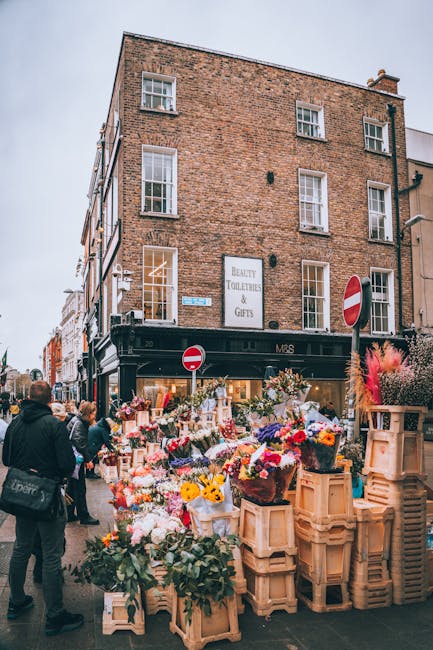
Permits and regulations for pop-up flower stalls in UK towns
Posted on 04/11/2026
If you are planning a pop-up flower stall in a UK town, the paperwork can feel more daunting than the flowers themselves. One minute you are choosing buckets, pricing bouquets, and deciding whether to stock roses or mixed seasonal stems; the next, you are trying to work out licences, council permission, and what happens if your pitch is on a pavement with a lot of foot traffic. Truth be told, the Permits and regulations for pop-up flower stalls in UK towns are not impossible to navigate, but they do need a sensible, local-first approach.
This guide breaks the topic down in plain English. You will learn what typically needs permission, how council rules usually work, what to check before trading, and where people often go wrong. It is written for anyone setting up a temporary floral stall in a market square, high street, event space, shopping parade, or outside a shop with landowner consent. And yes, the small details matter here. They really do.

Table of Contents
- Why permits and regulations matter
- How the process usually works
- Key benefits and practical advantages
- Who this is for and when it makes sense
- Step-by-step guidance
- Expert tips for better results
- Common mistakes to avoid
- Tools, resources and recommendations
- Law, compliance, standards and best practice
- Options and comparison table
- Case study or real-world example
- Practical checklist
- Conclusion
- Frequently asked questions
Why Permits and regulations for pop-up flower stalls in UK towns Matters
A pop-up flower stall might look simple from the outside: a table, a canopy, a few buckets of fresh stock, and a chalkboard with prices. But from the council's point of view, you are trading in public space, affecting footways, possibly handling cash or card payments, and presenting a small but real public safety and nuisance risk. That is why the rules matter.
In practice, the main reason for understanding permits early is to avoid being moved on, fined, or forced to stop trading on the day. Imagine setting up before 8 a.m. on a chilly Saturday, with condensation on the van windows and the first customers already asking for birthday flowers, only to discover the pitch was never approved. Not ideal. It happens more often than people think.
Regulatory compliance also helps you trade with confidence. Councils, private landowners, market operators, and event organisers are all more likely to say yes if you can show that you understand basic responsibilities around location, trading hours, waste, public liability insurance, and any food or plant health concerns. The better your paperwork, the smoother the setup.
Expert summary: for a pop-up flower stall, the main issue is rarely the flowers. It is the right to trade in the right place, safely, with the right permissions. Get that part right and the rest becomes far easier.
How Permits and regulations for pop-up flower stalls in UK towns Works
The exact process depends on where you plan to trade. A stall in a town-centre market is not treated the same as one outside a private venue, and neither is handled the same way as a stall on a public pavement. The common thread is that you need permission from the person or body controlling the space, and in some cases you may need additional approvals from the local authority.
1. Identify the trading location
Start by separating the possible trading spaces into three broad groups:
- Public land such as pavements, squares, roadside areas, or council-owned land
- Private land such as a forecourt, car park, or the frontage of a shop or venue
- Managed trading spaces such as markets, festivals, fairs, and seasonal events
Each one has a different approval route. If you are unsure who controls the space, ask before you spend money on stock or a gazebo. That simple question saves headaches later.
2. Check the trading permission
For private land, written permission from the landowner or operator is usually the starting point. For council land or a public highway, you may need a street trading licence, a permit, or a temporary consent arrangement, depending on the town. In some places, the council may have designated street trading zones; in others, the rules are stricter and more location-specific.
If you are trading as part of a market, the organiser may handle the site permissions, but you should still check what is included in the stall fee. Does it cover electricity? Does it allow you to use your own signage? Are there rules about vehicle access, set-up time, and waste removal? These things sound small. They are not small on a windy Friday afternoon.
3. Look at business and tax basics
Most pop-up flower stalls also need the ordinary business foundations in place. That can include registering as a business where required, keeping records, and understanding your tax obligations. If you are selling flowers regularly rather than just doing an occasional one-off stall, it is worth treating it as a proper trading operation from the start.
For some sellers, this is where a broader online presence helps. If you also sell seasonal bouquets or event arrangements, a product range such as all flowers can support your pop-up with a clearer brand offer, while more specific lines like best sellers make it easier to decide what to stock in a compact stall format.
4. Prepare for safety and operational conditions
Even a modest flower stall needs practical controls. Buckets of water can create slip hazards. Boxes and packaging can obstruct walkways. A canopy can become unstable in wind. If you are trading early in the morning, before the town centre properly wakes up, you will notice how quickly a narrow pitch fills with delivery bikes, pedestrians, and delivery trolleys.
That is why councils and organisers often ask for risk assessments or basic safety information. They are not being awkward. They are trying to stop a minor nuisance becoming a trip hazard or a blocked pavement. Fair enough, really.
Key Benefits and Practical Advantages
Getting the permissions sorted may not feel glamorous, but it brings real business advantages. The most obvious one is peace of mind. You can concentrate on selling flowers instead of wondering whether a parking warden, market supervisor, or council officer is about to appear with a clipboard.
Lower risk of interruption
When your stall is properly approved, you reduce the risk of being told to pack up halfway through the day. That matters most on your busiest trading days, such as market day, Valentine's week, Mother's Day, or the run-up to Christmas.
Better customer trust
Shoppers notice professionalism. A tidy stall, clear pricing, and a compliant pitch give the impression that your flowers are fresh, your stock is well managed, and your business is legitimate. That may sound obvious, but in a crowded high street, trust is half the sale.
More chances to trade in premium spots
Once you show that you understand local requirements, you are more likely to secure repeat permissions from councils, landlords, or event organisers. In some towns, the best pitches go to traders who are reliable, tidy, and easy to work with. Simple as that.
Stronger seasonal planning
Because floral sales are often tied to seasonal peaks, proper permissions help you plan inventory with confidence. You can line up themed stock, like spring bouquets or sympathy arrangements, without worrying that your only good pitch will disappear at the last minute.
| Practical area | Why compliance helps | What can go wrong without it |
|---|---|---|
| Pitch approval | Lets you trade legally in the right place | Removal, refusal, or enforcement action |
| Insurance and safety | Protects you and reassures others | Claims, disputes, or avoidable accidents |
| Stock planning | Supports seasonal demand | Wasted flowers or missed sales |
| Customer confidence | Makes the stall feel credible | Lower footfall and weaker conversion |
Another small benefit, often overlooked: once your stall setup is known locally, you can build a stronger rhythm. Regular customers start to look for you. They remember the smell of fresh roses in the morning air, the water droplets on the buckets, the quick chat about which stems last longest. That local familiarity is powerful.
Who This Is For and When It Makes Sense
This topic is relevant to a wide mix of sellers, and not all of them are full-time florists. You might be a local florist trialling a new selling point, a wedding florist wanting weekend visibility, a grower selling home-grown stems, or a small business testing demand before opening a permanent shop.
People who usually need to check permissions carefully
- Independent florists running weekend pop-ups
- Market traders adding flowers to their existing stall offer
- Event suppliers trading at fairs, shows, or seasonal gatherings
- Garden centres or local producers selling outside normal premises
- Charity traders and community groups selling flowers for fundraising
It also makes sense for businesses that want to test a new town before committing to longer-term retail costs. A pop-up can be a clever first step. You learn footfall patterns, customer preferences, and the type of bouquet people actually buy on impulse. Not always what you expect, either.
When it makes sense to slow down and check first
If your stall is on or beside a highway, near a station, next to a school, in a conservation area, or on a public square with heavy pedestrian flow, pause and check the rules before you launch. Extra sensitivity around access, obstruction, waste, and safety can kick in very quickly in those spaces.
Similarly, if you plan to use a van as part of the stall, or if you intend to trade after dark, the compliance picture becomes more complex. A pop-up at 10 a.m. is one thing. A pop-up at dusk with lights, cables, and temporary structures is another. In our experience, that is where people underestimate the admin.
Step-by-Step Guidance
Here is a practical way to handle the setup without getting overwhelmed. You do not need to do everything at once. Start with the location, then build the permissions around it.
Step 1: Choose the exact pitch
Be precise. "Somewhere in town centre" is not enough. You need to know the exact pavement, corner, forecourt, market bay, or event area. The rules can change from one side of a road to the other. Annoying, yes. But it matters.
Step 2: Find out who controls the space
Ask whether the pitch belongs to the council, a private landlord, a market operator, or an event organiser. If it is council-owned or on a public highway, ask about street trading permissions, temporary licences, or any designated trading scheme. If it is private, ask for written consent.
Step 3: Check whether your activity counts as street trading
In some towns, selling flowers from a fixed stall, van, or portable stand in a public space may fall within street trading rules. The wording differs between councils, but the core question is usually whether you are selling in a public place, on a regular basis, or in a way that affects highway use.
Step 4: Ask about any extra requirements
Depending on the location, you may need to cover:
- Public liability insurance
- Risk assessment
- Waste disposal arrangements
- Vehicle access rules
- Power or water arrangements
- Signage limits
- Opening hours and trading duration
If your setup is near a busy crossing, a bus stop, or a narrow pavement, expect extra scrutiny. That is normal.
Step 5: Prepare the stall operation
Think beyond the permission itself. Make sure your stall can be set up neatly and safely. Keep walkways clear, secure any display stands, and plan for wind or rain. Flowers look lovely under soft daylight, but they can look a bit tragic if the packaging is soggy and the canopy is half collapsed at 3 p.m.
For product planning, many traders find it useful to stock a small core range and a few seasonal options. For example, everyday flower choices can sit alongside more occasion-specific items such as any occasion and cheap flowers, while more premium displays can be supported by luxury flowers. That mix helps when footfall is unpredictable.
Step 6: Keep records and renew on time
Keep a folder, digital or paper, with permissions, insurance, correspondence, and renewal dates. Pop-up trading often relies on short windows, and it is easy to let a temporary consent lapse. One missed date can mean losing a good pitch for the rest of the season.
Expert Tips for Better Results
A few practical habits make a big difference, especially if you want to move from occasional stalls to a reliable local presence.
Plan around local footfall patterns
Towns have their own rhythm. Market day may be brilliant. Tuesday lunchtime may be quiet. Rain changes everything. A cold wind off the high street can reduce browsing time, while a sunny Saturday may sell half your stock before noon. The permission is only part of the equation; the trading window matters just as much.
Keep the stall visually tidy
Regulators and customers both react well to order. Buckets aligned, prices visible, waste contained, and packaging stored neatly. It sounds basic because it is basic. But basic done well is often what makes a pop-up succeed.
Use simple signposting
If your stall is approved, make it obvious who you are and what you sell. Clear signage helps customers understand whether they are buying hand-tied bouquets, sympathy flowers, wedding florals, or seasonal gifts. It also reduces confusion about pricing.
Have a rain plan
British weather does what it wants. A proper cover, weighted base, and waterproof storage plan are not optional extras. They are the difference between a polished stall and a damp scramble.
Choose stock that travels well
For pop-up trading, flowers that cope well with handling and temperature swings are often the safest bet. If you also sell arrangements that are wrapped, boxed, or vase-ready, you can protect margins a bit more effectively. A town-centre customer who wants a quick gift before dinner tends to value convenience, not elaborate theatre.
Do not rely on memory alone
People forget details. Councils forget nothing. Joking aside, keep the permission in writing, save emails, and note the exact terms. If someone on site questions you, you want to answer calmly and quickly.
Common Mistakes to Avoid
Here are the mistakes that trip people up most often. They are easy to avoid if you know what to look for.
Assuming a market stall is automatically covered
Just because a market is operating does not mean your particular trading activity is automatically approved. You may need a stallholder agreement, and there may be rules on what you can sell, where you can park, and how long you can stay.
Trading on public land without checking access rules
Some locations look harmless, but still count as public highway or controlled space. If your stall could obstruct pedestrians, emergency access, or mobility access, the permissions become much more sensitive.
Ignoring waste and cleanliness obligations
Flower stalls generate trimmings, broken packaging, water spills, and sometimes damaged stems. If you leave that behind, you create a problem for everyone. Councils and landowners remember. So do nearby traders.
Using vague verbal permission only
A friendly nod is not the same thing as proper approval. If a pitch is valuable, get the agreement in writing. It saves arguments later and shows professionalism.
Forgetting the practical side of setup
Many stalls fail because of logistics, not demand. No weights for the canopy. No spare buckets. No dry storage. No plan for card payments when signal drops. It's a small disaster waiting to happen, and usually at the worst possible moment.
Overloading the stall
Too much stock can crowd the space and make it harder to stay tidy and compliant. A compact, well-curated display often works better than a jammed table. Customers can see what you offer and move easily around the stall.
Tools, Resources and Recommendations
You do not need fancy systems to run a compliant pop-up flower stall, but a few basic tools help a lot.
- Permission folder: keep licences, emails, agreements, and insurance together
- Site plan or pitch map: useful for showing exactly where the stall sits
- Risk assessment notes: simple written notes on slips, wind, water, cables, and access
- Stock checklist: reduces last-minute forgetting when the morning is busy
- Waste bags and cleaning kit: keeps the pitch neat
- Card payment device: essential in most towns now, especially for impulse buys
If you are building a wider floral offer, it can help to organise products by customer intent. For example, seasonal buying might be supported by summer flowers or autumn, while special occasions can be grouped through lines such as birthday and thank you. That kind of structure makes stall planning simpler and can improve upsells.
One more recommendation: keep a small contingency list for alternative pitches or weather-adjusted trading. A town may have a secondary space, a covered market, or an indoor venue you can use if the weather turns ugly. That flexibility is worth its weight in stems.
Law, Compliance, Standards, or Best Practice
Because this topic touches trading law and public space use, careful wording matters. The legal and regulatory requirements for pop-up flower stalls in UK towns can vary by local authority, land ownership, and trading model. That means the safest approach is to treat each site as its own case rather than assuming one town's arrangement will apply elsewhere.
Common compliance themes include:
- Street trading controls: local rules may govern where and how you can sell in public spaces
- Landowner consent: private land usually needs clear written permission
- Public safety: stalls must not create trip hazards, block access, or pose avoidable risks
- Business records: you should keep proper paperwork for permissions, payments, and trading activity
- Insurance: many organisers and councils expect public liability cover
Best practice is straightforward: confirm the site control, get written approval, understand any local trading conditions, and set up the stall so it does not obstruct people or damage the area. If you are using lighting, extension leads, or any electrical equipment, apply extra caution and use suitably safe equipment. No shortcuts there.
Food-adjacent concerns can also arise if you sell gifts alongside flowers, or if your stall includes products that might be treated differently. In that case, ask the organiser or council how they classify the activity. It is much easier to ask early than to explain later.
Options, Methods, or Comparison Table
Different pop-up setups have different permission needs. Here is a practical comparison.
| Trading method | Typical permission route | Best for | Main watch-out |
|---|---|---|---|
| Pavement or high-street stall | Council permission or street trading approval | Walk-by impulse sales | Access and obstruction rules |
| Private shop frontage | Landowner consent | Neighbourhood exposure and easy setup | Need for clear written terms |
| Market pitch | Market operator agreement | Regular footfall and repeat customers | Pitch fees and stall conditions |
| Festival or seasonal event | Event organiser approval | High-volume short bursts of trade | Varied event rules and short setup windows |
| Van-based pop-up | May need extra highway or site approval | Mobile trading flexibility | Parking, loading, and display constraints |
If you are choosing between them, think about three things: footfall, control, and compliance effort. A market pitch may give steadier sales, but a private frontage may be simpler to manage. A high-street location may get attention, but it can also bring more scrutiny. There is no one right answer, only the right fit for your trading style.
Case Study or Real-World Example
Consider a florist who wanted to test weekend sales in a small UK town before taking on a permanent unit. The first thought was to set up outside a busy bakery on Saturday mornings, because the footfall looked promising and the smell of fresh coffee nearby seemed to guarantee passing trade. Nice idea. But the trader paused before ordering stock.
They checked who controlled the frontage, asked whether the pavement was considered public highway, and found that the space sat within a managed town-centre area with specific restrictions on temporary trading. Instead of simply turning up, they applied for the correct permission, agreed a clear pitch, and prepared a compact stall with a small curated range.
The result was not just compliance. It was calmer trading. Customers could approach easily, the display stayed tidy, and the organiser knew exactly who was on site. The florist also learned which stems sold fastest in that town: neutral mixed bouquets for everyday gifting, then a few bolder seasonal pieces for special occasions. That kind of knowledge only comes from proper, repeatable trading.
There was one slight hiccup, because of course there was. A gusty morning pushed the canopy edge loose, and they had to re-weight the stand with extra water buckets and sandbags from the van. Minor drama, easily fixed. But imagine that happening without a proper permission in place. Different story entirely.
Practical Checklist
Use this checklist before your first pop-up:
- Confirm the exact pitch and who controls it
- Check whether the site is public land, private land, or a managed market/event area
- Get written permission or the relevant licence/consent
- Ask about any local trading restrictions or set-up times
- Arrange public liability insurance if required or expected
- Prepare a basic risk assessment
- Plan for wind, rain, and safe display setup
- Keep walkways and access points clear
- Arrange waste removal and cleaning supplies
- Store all approvals and documents in one place
- Test card payments and mobile signal before trading day
- Review renewal dates or permission end dates
If you can tick all that off, you are in a much stronger position. Not perfect, because nothing in pop-up trading ever is. But strong.
Conclusion
The main lesson is simple: pop-up flower stalls are easiest to run when the permission is sorted before the petals hit the table. In UK towns, the exact rules vary by council, landowner, and location, but the pattern is always the same. Find out who controls the space, secure the correct approval, keep the stall safe and tidy, and make sure your setup fits the local trading conditions.
Do that, and you can focus on what actually matters: selling beautiful flowers, serving customers well, and building a local reputation that lasts beyond one busy weekend. The admin may feel a bit tedious at first. But once it is done properly, it frees you up to trade with confidence. That is worth the effort.
Get a free quote today and see how much you can save.
And if you are standing there on a cold morning with the first bucket filled and the town just waking up, it helps to know you have done things the right way. That quiet confidence is often the best part.
Frequently Asked Questions
Do I need a permit for a pop-up flower stall in a UK town?
Often, yes, especially if you are trading on public land, a pavement, or another space controlled by the council. Private land usually needs landowner permission, and markets or events have their own rules.
Are flower stalls treated the same as food stalls?
No. Flower stalls usually have different compliance concerns, but you still need to think about public space use, access, safety, and waste. If you also sell gifts or other products, extra rules may apply depending on the site.
Can I just set up outside a shop if the owner says yes?
If the frontage is private and the owner truly controls it, written permission may be enough. But if the area includes public highway or pavement access, you should check whether the council also needs to approve it.
What documents should I keep for a flower pop-up stall?
Keep written permission, any licence or agreement, insurance documents, risk assessment notes, and renewal dates. It is also sensible to keep emails confirming pitch details and any special conditions.
How long does it take to get approval?
That depends on the town, the type of location, and the organiser's process. Some permissions are quick; others take longer, especially if a council review or formal application is needed. Leave enough time, because last-minute applications can be stressful.
Do I need public liability insurance?
Many councils, organisers, and landowners expect it, and it is generally a sensible safeguard for any public-facing stall. The exact requirement depends on the site, but it is widely considered best practice.
Can I use a gazebo or canopy for my flower stall?
Usually yes, but you should check whether the location allows it and make sure it is safely weighted and secured. Wind can be a real issue in open town-centre spaces, especially around corners and wide pavements.
What are the most common reasons a pop-up flower stall gets refused?
Common reasons include unsuitable location, obstruction of pedestrians, lack of written permission, missing insurance, poor site safety, or the area already being designated for other trading use. Sometimes it is just timing and site availability.
Can I trade at a local market without a separate permit?
Sometimes the market operator's agreement covers the stall, but do not assume that automatically. Ask what is included in the market terms and whether you need to complete any extra paperwork.
What happens if I trade without permission?
You may be asked to stop trading, move your stall, or face enforcement action depending on the location and the local authority's rules. Even if nothing happens on day one, it is not worth the risk.
Is there a difference between a one-day pop-up and a regular stall?
Yes. A one-off stall may have simpler approval in some places, while a recurring stall often needs a more formal permission route or a longer-term arrangement. Frequency can affect how the activity is classified.
What is the safest way to start if I am new to pop-up trading?
Start with a clearly controlled location, such as a market or a private pitch where you can get written permission. That gives you a cleaner launch, fewer surprises, and a better chance to learn the business side without unnecessary pressure.