DIY bouquet vs pro florist: cost, time and finish
Posted on 13/05/2026
Choosing between a DIY bouquet and a professional florist sounds simple until you're actually standing there with flowers, ribbon, scissors and a clock ticking away. Do you save money by doing it yourself, or do you pay more for the calm, polished result? In reality, the answer depends on what matters most: cost, time and finish. This guide breaks down the trade-offs in plain English, so you can decide what makes sense for your occasion, your budget and, frankly, your stress levels.
We'll look at how each option works, where the hidden costs show up, what the final bouquet usually feels like in the hand, and when a florist is worth every penny. If you're planning a birthday, anniversary, wedding, sympathy arrangement or just want something beautiful for the table, this should help you choose with confidence. And yes, there is a difference between "homemade charm" and "professionally composed" - sometimes a very big one.
Table of Contents
- Why DIY bouquet vs pro florist: cost, time and finish Matters
- How DIY bouquet vs pro florist: cost, time and finish Works
- Key Benefits and Practical Advantages
- Who This Is For and When It Makes Sense
- Step-by-Step Guidance
- Expert Tips for Better Results
- Common Mistakes to Avoid
- Tools, Resources and Recommendations
- Law, Compliance, Standards, or Best Practice
- Options, Methods, or Comparison Table
- Case Study or Real-World Example
- Practical Checklist
- Conclusion
- Frequently Asked Questions
Why DIY bouquet vs pro florist: cost, time and finish Matters
Flowers are one of those purchases where the visible result matters almost as much as the price tag. A bouquet is not just a bunch of stems. It's the first thing someone notices on a birthday table, the detail in a wedding photo, or the small quiet gesture that says "I was thinking of you" without needing a speech.
That is why the DIY bouquet versus professional florist decision comes down to three linked questions:
- Cost: what you pay upfront, and what you may need to buy or replace later.
- Time: how long the arrangement takes to plan, source, condition and finish.
- Finish: whether the bouquet looks balanced, secure and intentional, or a bit... hopeful.
To be fair, DIY is not always the cheaper option once you include hidden extras like tape, wrap, ribbon, flower food, transport and the extra bunch you buy because one stem snapped in the kitchen sink. Meanwhile, a florist brings skill, rhythm and consistency. That matters for larger events, tighter deadlines and arrangements where presentation carries real weight.
If you want to browse what a professional range can look like in the real world, the all flowers collection is a useful starting point, and the best sellers page shows what many customers choose when they want something reliable rather than experimental. For tighter budgets, the cheap flowers and budget pages are a good reminder that a florist-led option does not automatically mean luxury pricing.
How DIY bouquet vs pro florist: cost, time and finish Works
Let's break the process down properly. A DIY bouquet and a florist-made bouquet follow the same basic logic, but the execution is very different.
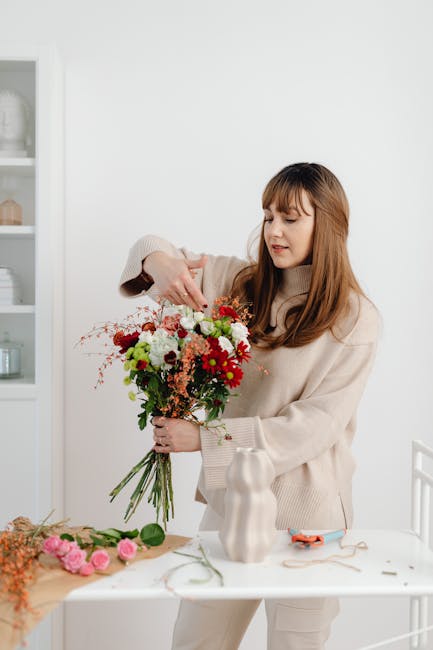
How a DIY bouquet usually happens
- You choose flowers, usually from a supermarket, market, local grower or mixed bunches from a shop.
- You condition the stems by trimming, removing leaves, and letting them drink water.
- You decide on a shape: round, loose, hand-tied, structured, wild, or somewhere in between.
- You build the bouquet stem by stem, checking balance as you go.
- You wrap or tie it, then try to make the final result look neat rather than accidental.
The process can be satisfying. It can also be messy. A kitchen counter full of damp stems, bits of leaf and ribbon curls is a rite of passage, apparently.
How a professional florist usually works
- The florist starts with the brief: occasion, colours, budget, style and timing.
- They select stems that suit the design and the season, often with better grade control.
- The flowers are conditioned, trimmed and arranged using trained techniques for shape and support.
- They finish the bouquet with wrap, water source, ribbon or vase presentation, depending on the order.
- They also plan for transport, longevity and the event itself, not just the look on the workbench.
That final point is easy to miss. A florist is not only designing for appearance, but for how the bouquet will travel, sit on a table, last through the day and still look presentable after being carried around in a car boot or handed over at the door.
If you're buying for a specific moment, browsing by occasion can help narrow the choice. For example, the anniversary, birthday, get well and sympathy pages are all useful when the emotional tone matters as much as the flowers themselves.
Key Benefits and Practical Advantages
There is no universal winner here. The better choice depends on what you are optimising for. That said, each route has clear strengths.
DIY bouquet strengths
- Lower entry cost if you already have tools and can source flowers well.
- Creative control over colour, shape and sentiment.
- Flexible timing if you are making it at home and not tied to shop hours.
- Personal feel that can be lovely for intimate gifts.
Professional florist strengths
- Better finish thanks to training, technique and design judgement.
- Less stress when the bouquet needs to look important, not homemade.
- More reliable longevity because flowers are handled and conditioned properly.
- Convenience especially if you need same-day delivery or a last-minute rescue.
In our experience, the finish is where the gap becomes obvious. A DIY bouquet can be charming, but a florist's bouquet usually has cleaner spacing, stronger structure and more confident proportion. The bouquet feels "composed" rather than assembled. That's the difference people notice, even if they can't always explain it.
For certain gift types, presentation really amplifies the impact. A bouquet paired with flowers and chocolate or flowers and balloons can work beautifully when you want the moment to feel complete rather than just floral. For a safer all-round option, florist choice gives the designer room to use the best stems available that day.
Who This Is For and When It Makes Sense
Different situations call for different levels of polish. That sounds obvious, but people still overspend on DIY stress or underthink the importance of a properly finished bouquet. Happens all the time.
DIY makes sense when:
- You're creating something small and personal.
- The occasion is informal, like a dinner at home or a casual thank-you.
- You already have the tools and a bit of floral confidence.
- The look you want is relaxed, loose and unstructured.
- You enjoy making things and do not mind a trial-and-error process.
A pro florist makes sense when:
- The bouquet is for a major occasion, such as a wedding, engagement or milestone anniversary.
- The flowers need to travel well or arrive on time.
- Presentation matters for photos, ceremony settings or public gifting.
- You need speciality flowers, a specific palette, or a style that must look refined.
- You want the process handled cleanly, without the "oops, the roses are wilting" panic.
For wedding-related work especially, the difference is hard to ignore. A couple may think about doing bouquets themselves, then realise the day already has enough moving parts. For reference, options like bridal bouquets, bridesmaid bouquets, buttonholes and table arrangements can be a useful benchmark for how much coordination a florist actually removes from your plate.
For sympathy or funeral flowers, professional handling is usually the more appropriate choice because tone, structure and timing are delicate. A well-made spray or wreath carries more dignity. You can see that sort of care in the funerals, wreaths, sprays and tributes sections.
Step-by-Step Guidance
If you are still deciding, the easiest way is to compare the two routes stage by stage. That shows you where the time and quality differences really happen.
Step 1: Set the purpose
Start with the occasion. Is this a cheerful gift, a romantic gesture, a thank-you, or something formal? A casual bouquet for a friend can tolerate a looser finish. A wedding bouquet or condolence arrangement cannot.
Step 2: Decide your budget honestly
Work out the real figure, not just the flower spend. DIY may look cheaper until you add scissors, binding tape, ribbon, wrapping paper, a vase, and a few backup stems. Professional florists build those details into the service, so the cost is more transparent. If your budget is modest, pages like 40-50 and over 50 can help you see what a florist can offer at different spending levels.
Step 3: Choose the flower types carefully
Some flowers are naturally easier for DIY work because they hold shape well. Others are softer, more delicate or more difficult to balance. Sturdy stems can make life easier if you're learning. Think of flowers like carnations, alstroemeria, chrysanthemums, germini, lilies and tulips as useful starting points, depending on the design and season.
Step 4: Build for structure, not just colour
Many first-time DIY bouquets focus on colour and forget shape. The bouquet then looks flat from one side and lopsided from another. Aim for layers: focal flowers, supporting flowers, texture and greenery. Keep turning the bunch in your hand as you build. It feels fussy, but it works.
Step 5: Finish with transport in mind
If the bouquet needs to travel, you'll want hydration, secure wrapping and enough protection around the heads. Florists think about this automatically. DIY makers sometimes discover too late that a pretty bouquet in the kitchen does not stay pretty in the back seat of a car on a damp Tuesday afternoon.
Expert Tips for Better Results
A few florist-style habits can improve almost any DIY bouquet. These are small things, but they change the result more than people expect.
- Use fresh water early. Don't leave stems out while you search for ribbon or answer the door.
- Strip lower leaves properly. Leaves below the waterline shorten vase life and make water murkier.
- Trim stems at an angle. It helps with water uptake, especially on woody stems.
- Work in odd numbers. Odd groupings often look more natural and less staged.
- Keep one colour dominant. Too many competing shades can make the bouquet feel busy.
- Add a texture flower or two. It creates depth and a more finished look.
If you want a bouquet with cleaner lines and a strong colour story, consider looking at pages like pink, white, purple, red and yellow. Those collections are handy when you want to plan a DIY palette or describe your brief to a florist without faffing about.
A florist can also help you refine an idea that starts broadly, such as choosing a bouquet from mixed colours for a cheerful gift or something more composed from the luxury flowers range when you want the design to land with more impact.
Common Mistakes to Avoid
This is the section where a lot of DIY bouquets go sideways. Not always dramatically. Sometimes just a little. Which is worse, in a way.
- Buying flowers without checking open time. Some stems arrive too closed; others are already going over.
- Ignoring stem conditioning. A quick trim and a rest in water are not optional extras.
- Using too many varieties. More flowers do not automatically mean a better bouquet.
- Forgetting scale. Small flowers can disappear next to bold blooms, and vice versa.
- Overwrapping the bunch. If the wrap fights the flowers, the bouquet looks heavy.
- Leaving it too late. DIY bouquets always take longer than you think.
There's also the mistake of assuming "finish" only means pretty. It also means stable, tidy and appropriate for the setting. A formal bouquet with uneven stems and loose binding can feel unfinished even if the flowers themselves are lovely.
For occasions where presentation and timing are especially important, you may prefer a florist-created arrangement from pages such as same day delivery, flowers in a vase or any occasion. Those options reduce the risk of a last-minute scramble, which, let's face it, is rarely a fun place to be.
Tools, Resources and Recommendations
If you are going DIY, a small toolkit makes life far easier. You do not need a florist workshop, but you do need the basics.
- Sharp floral scissors or a clean knife
- Florist tape or binding tape
- Ribbon or twine
- Clean bucket or vase for conditioning
- Flower food, if available
- Wrapping paper or kraft paper
- Water source for transport if the bouquet will travel
For inspiration, it helps to study ready-made bouquet styles before you start. Browse the main range on best sellers, then compare with occasion-led pages like romance and love, birthday, thank you and thinking of you. It's a simple way to notice what makes a bouquet feel balanced rather than crowded.
If your bouquet is for a more expressive moment, you might look at the Valentine's Day collection, or broader gift ideas like gifts for her, gifts for him and flowers for men. That can help you match style to recipient without overthinking every stem.
Law, Compliance, Standards, or Best Practice
For a normal bouquet purchase, there usually isn't a major compliance burden from the buyer's side. But there are a few best-practice points worth keeping in mind, especially if you're ordering for weddings, funerals, workplaces or delivery to public venues in the UK.
- Be clear on the delivery details. Accurate addresses, access notes and timing windows matter more than people think.
- Check venue rules. Some churches, cemeteries, care homes, event spaces and hotels have practical restrictions on size, access or placement.
- Consider cultural and occasion suitability. Colours and flower types can carry meaning, so brief the florist carefully for funerals, memorials and religious observances.
- Watch for allergies or fragrance sensitivity. This is especially relevant in offices, hospitals, schools and small rooms.
- Ask about substitutions. Seasonal flowers change, and a good florist will normally substitute like for like in style and value rather than leaving the design unbalanced.
In the UK, professional florists also follow ordinary business standards around clear pricing, honest product descriptions and consumer expectations. If you are ordering a specific bouquet type, it is sensible to confirm the style, flower mix and approximate size rather than assuming the image is exact. That is just good buying practice, really.
Options, Methods, or Comparison Table
Here's the practical comparison most readers actually need.
| Factor | DIY bouquet | Pro florist |
|---|---|---|
| Upfront cost | Often lower at first, but tools and extras can add up | Usually higher headline price, but more is bundled in |
| Time | Can take a surprising amount of planning and hands-on work | Much faster for you; the florist handles the process |
| Finish | Can be charming, personal and creative, but variable | Cleaner, more balanced and usually more polished |
| Stress | Higher, especially if you are new to flower arranging | Lower, because the technical work is off your plate |
| Best for | Small gifts, casual moments, creative home projects | Milestone gifts, weddings, sympathy, important occasions |
| Longevity | Depends heavily on handling and freshness | Usually better due to proper conditioning and assembly |
If you want a simple decision rule: choose DIY when the emotional value is in making it yourself, and choose a florist when the emotional value is in the result being unmistakably well-finished. That line helps more than any spreadsheet.
Case Study or Real-World Example
Imagine it's Friday morning and you've got two jobs: a birthday bouquet for your sister and a wedding anniversary dinner that evening. You're tempted to buy a mixed bunch, trim it at home and call it done. Reasonable idea. But look closer.
For the sister's birthday, a DIY bouquet might be perfect if she likes informal, slightly untidy arrangements and you have time to do it properly. You could choose a bright, friendly mix, perhaps leaning on colours and styles that feel lively rather than exact. Something built from summer flowers or a mixed palette could work well, especially if you like making gifts feel personal.
For the anniversary dinner, though, the brief changes. The bouquet needs to look composed on a restaurant table, survive transport, and feel special enough to match the occasion. That's where a florist earns the fee. A design from the anniversary or romance and love pages gives you a more dependable finish without the guesswork.
We've seen this play out often: people start with a DIY plan to save money, then end up buying extra flowers, a ribbon they don't love, a replacement bunch after a stem break, and still feeling unsure about the final result. At that point, the savings are smaller than expected. Sometimes it works beautifully. Sometimes it becomes a bit of a Saturday afternoon project you didn't ask for.
Practical Checklist
Use this quick checklist before deciding.
- Have you defined the occasion clearly?
- Do you know the exact budget, including materials and delivery if needed?
- Do you have enough time to condition and arrange the flowers properly?
- Is the bouquet for a casual moment or a high-stakes event?
- Are the flowers likely to travel far or wait before being handed over?
- Would a more polished finish make the gift feel more appropriate?
- Do you already have scissors, tape, wrap and a vase?
- Are you comfortable with a little trial and error?
- Would a florist reduce stress in a meaningful way?
- Have you compared options across simple, budget and premium ranges?
If you tick more boxes on the florist side, that's usually your answer. If you're excited by the process itself and the occasion is relaxed, DIY can be a lovely choice.
Conclusion
The real answer to DIY bouquet vs pro florist: cost, time and finish is not "one is always better." It's about fit. DIY can be rewarding, personal and budget-friendly in the right setting. A pro florist brings speed, consistency and a level of finish that is hard to replicate when you're working at home with a pair of scissors and limited patience.
If your priority is saving money and enjoying the making, go DIY - but allow more time than you think. If your priority is a bouquet that looks elegant, arrives reliably and holds together beautifully through the day, a florist is usually the wiser route. For special occasions, that extra confidence matters. Quite a lot, actually.
And if you want to explore ready-made options that suit different budgets, occasions and styles, the collections above give you a solid starting point without the guesswork.
Get a free quote today and see how much you can save.
Frequently Asked Questions
Is DIY bouquet actually cheaper than buying from a florist?
Sometimes, yes - but not always. If you already have tools and can buy flowers efficiently, DIY can cost less. Once you add wrap, ribbon, tape, flower food and a backup bunch, the gap often narrows.
What takes more time: making a bouquet yourself or ordering from a florist?
DIY takes far more of your time. A florist does the sourcing, conditioning, arranging and finishing for you. Even a simple bouquet can take a surprising amount of time at home if you want it to look tidy.
Why do florist bouquets usually look better?
Because florists work with structure, balance, stem control and proportion every day. They know how to make the bouquet look full without becoming bulky, and how to finish it so it feels intentional.
What flowers are easiest for a DIY bouquet?
Hardier flowers such as carnations, alstroemeria, chrysanthemums and germini are usually easier for beginners. They hold shape well and forgive a few small mistakes, which is handy when you're learning.
When is it better to use a professional florist?
Use a florist for weddings, anniversaries, sympathy flowers, formal gifts, delivery deadlines and any occasion where the presentation needs to feel polished and dependable.
Can I make a bouquet look professional at home?
Yes, to a point. Good conditioning, a restrained colour palette, clean stem lengths and careful wrapping all help. Still, matching a trained florist's finish is difficult without practice.
What is the hidden cost of DIY flowers?
The hidden cost is usually the extras: tools, wrap, ribbon, water care supplies, transport protection and replacement stems if something goes wrong. Time is part of the cost too.
Are florist choice bouquets a good compromise?
Absolutely. A florist choice bouquet gives the designer freedom to use the best seasonal stems available. It can be a very practical middle ground between full DIY and a fully bespoke brief.
How do I choose between a simple bouquet and a more luxurious florist arrangement?
Think about the occasion, not just the budget. For a casual thank-you, a simple bouquet may be enough. For an engagement, milestone birthday or romantic gift, a more luxurious arrangement often makes better sense.
Do DIY bouquets last as long as florist bouquets?
They can, but only if the flowers are fresh and properly conditioned. Florists usually have an edge because they handle stems more carefully and build the bouquet with longevity in mind.
Is a florist worth it for small occasions?
If the occasion is low-pressure, DIY may be fine. But if you're short on time or want the bouquet to feel extra special, even a small florist arrangement can be worth it. The peace of mind is part of the value.
What should I tell a florist if I want a bouquet that feels personal?
Share the occasion, colours you love or dislike, the recipient's style, any scent concerns, the budget and whether you want something romantic, playful, elegant or seasonal. The clearer the brief, the better the result.